Why food matters more after thirty
Muscle mass tends to decline slowly from the early thirties if it is not used, and many men gain weight around the waist during the same years. Daily eating patterns influence blood pressure, blood sugar and cholesterol, which are the three measurements most often discussed at a routine check-up.
None of this means that a single meal decides anything. Health outcomes follow from patterns over months and years, which is why this article focuses on arrangements that can be repeated rather than strict rules.
Reading the plate: Isi Piringku
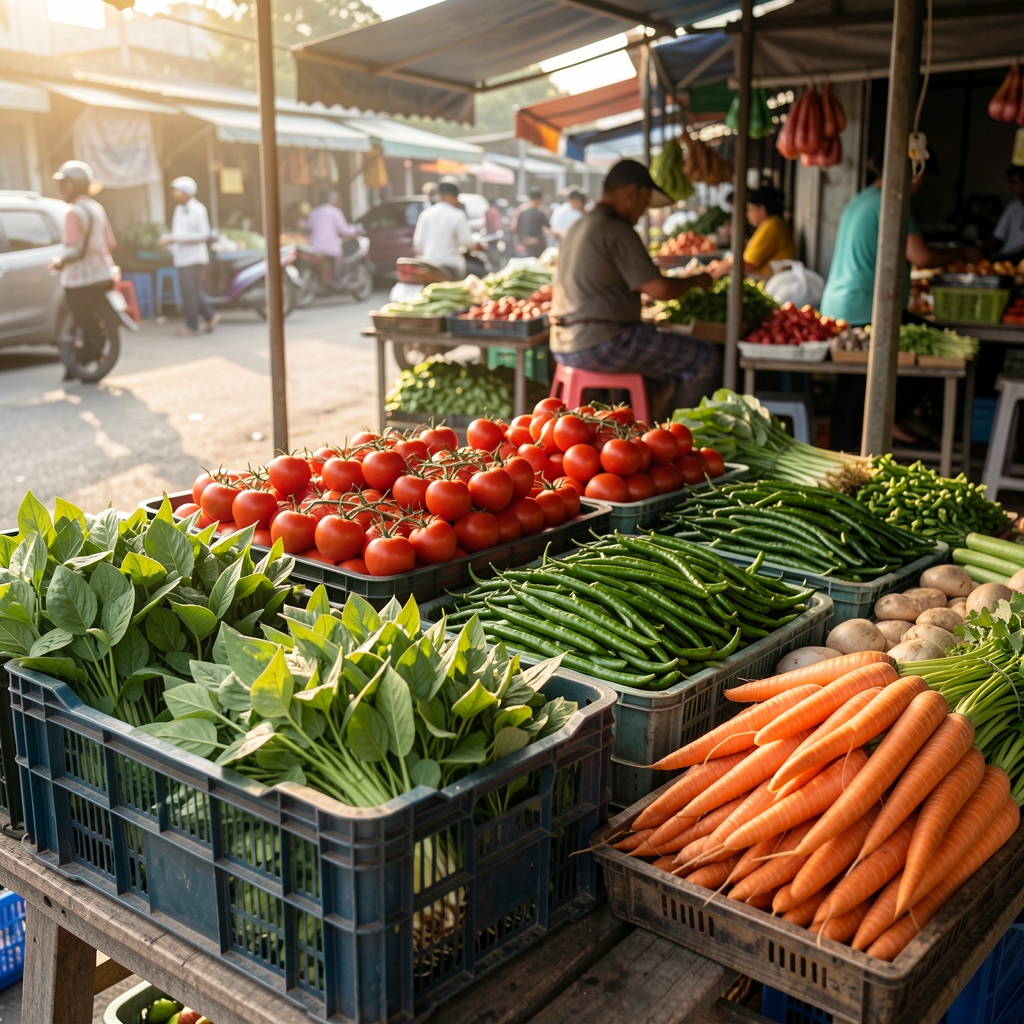
The Indonesian Ministry of Health describes a balanced meal through the Isi Piringku (“fill my plate”) guide. As a rough picture, a plate is divided so that about one third holds staple foods such as rice, potatoes or corn, about one third holds vegetables, one sixth holds protein dishes and one sixth holds fruit.
Many home-style meals already contain these parts. The common adjustment is proportion: a large mound of rice with a small portion of vegetables can be turned around without changing the dishes themselves.
| Part of the plate | Familiar examples | Notes |
|---|---|---|
| Staples | Steamed rice, boiled sweet potato, corn, whole-grain bread | Smaller portions of white rice, or mixing in brown rice, change the fibre content. |
| Protein dishes | Tempe, tahu, grilled or steamed fish, eggs, chicken without skin | Grilling, steaming and boiling add less oil than deep frying. |
| Vegetables | Sayur bening, tumis kangkung, gado-gado, pecel, lalapan | A variety of colours covers a wider range of nutrients. |
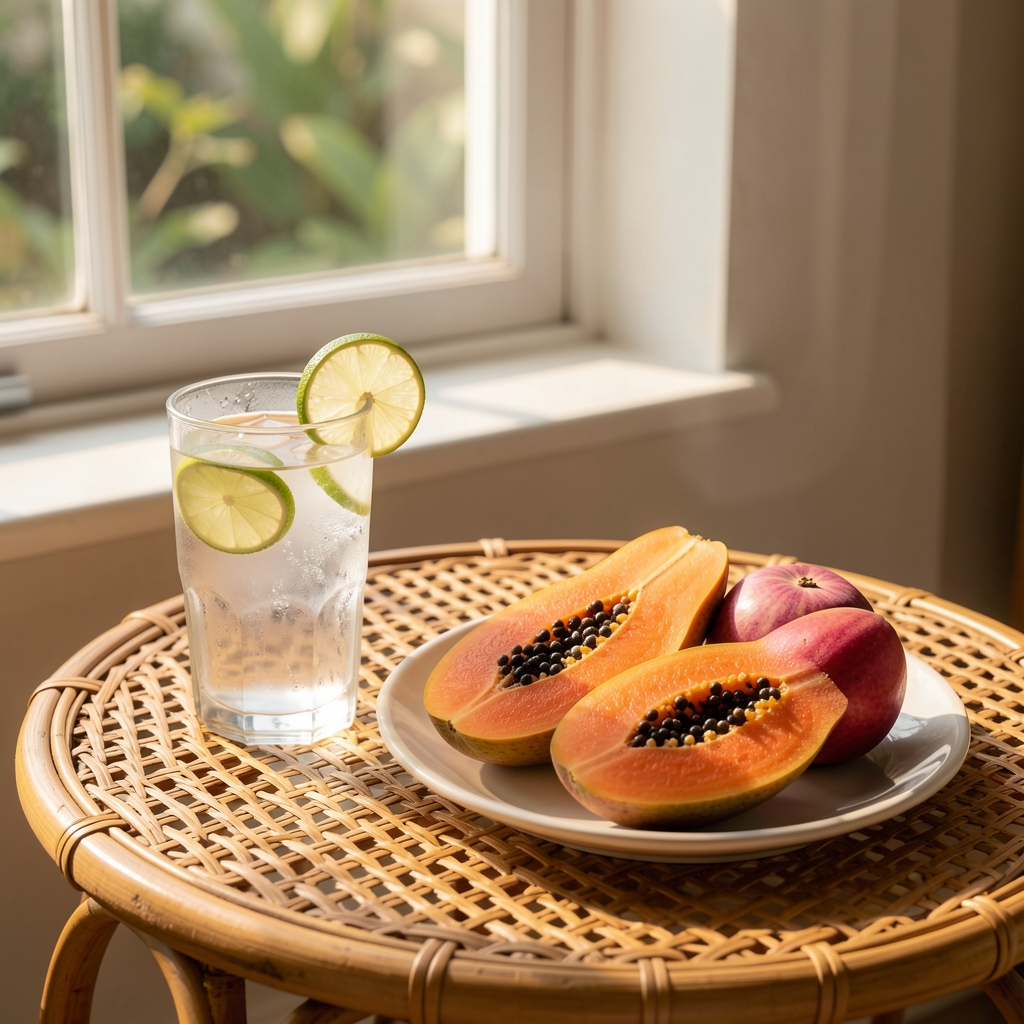
| Fruit | Papaya, banana, guava, watermelon, salak | Whole fruit contains fibre that juice often lacks. |
Protein and fibre
Protein supports muscle maintenance, particularly when combined with regular resistance exercise. Plant sources such as tempe and tahu, fish, eggs and poultry are all commonly eaten in Indonesia. Spreading protein across breakfast, lunch and dinner is often easier than concentrating it in one meal.
Fibre comes from vegetables, fruit, legumes and whole grains. Many guidelines suggest roughly 25 to 30 grams a day for adults, an amount that many people in cities do not reach. Fibre slows the absorption of sugar and contributes to the feeling of fullness.
Salt, sugar and fat: the G4G1L5 reminder
Indonesian public health messaging uses the shorthand G4G1L5 as a daily ceiling for adults: no more than four tablespoons of sugar (about 50 grams), one teaspoon of salt (about 5 grams of salt, or 2,000 mg of sodium) and five tablespoons of fat or oil (about 67 grams). These amounts include what is added during cooking, in packaged foods and in drinks.
Where the hidden amounts tend to be
- Sweet tea, es kopi susu, bottled tea and soft drinks, which can contain several teaspoons of sugar in one serving.
- Instant noodles, stock cubes, sambal sachets and soy sauce, which contribute sodium.
- Fried snacks such as gorengan and krupuk, which add oil quickly because portions are small and easy to repeat.
- Santan-based dishes eaten often, which add saturated fat.
Fluids in a warm climate
In Jakarta's heat, fluid needs rise with activity and sweating. Total daily fluid intake for adult men is often cited at around 2.5 litres, including water from food. Plain water, unsweetened tea and coconut water in moderation are common choices. If urine is consistently dark yellow, it may suggest that more fluid is needed, although some medications and vitamins also change urine colour.

Small habits that tend to last
- Start with vegetables. Adding a portion of vegetables to each meal is often simpler than removing anything.
- Watch the drinks. Reducing sweetened drinks to a few times a week removes a large share of added sugar for many people.
- Plan for eating out. Warung and canteen menus usually offer steamed or grilled options and extra vegetables on request.
- Eat without screens when possible. Attention to a meal helps most people notice fullness.
- Keep Ramadan in view. During fasting months, sahur and iftar can be arranged around water, fibre and protein instead of fried and very sweet foods alone.
When to speak with a professional
People with diabetes, kidney disease, high blood pressure, food allergies or a history of eating difficulties should discuss food changes with a doctor or a registered dietitian (ahli gizi) before making large adjustments. The same applies to anyone considering supplements; our hormonal balance article explains why product claims deserve careful checking.
Sources and further reading
- Ministry of Health of the Republic of Indonesia, Pedoman Gizi Seimbang and the Isi Piringku materials.
- World Health Organization, healthy diet fact sheet.
- Indonesian Dietary Reference Intakes (Angka Kecukupan Gizi), Ministry of Health regulation.
This article is general information and does not replace individual advice. See our medical disclaimer.